
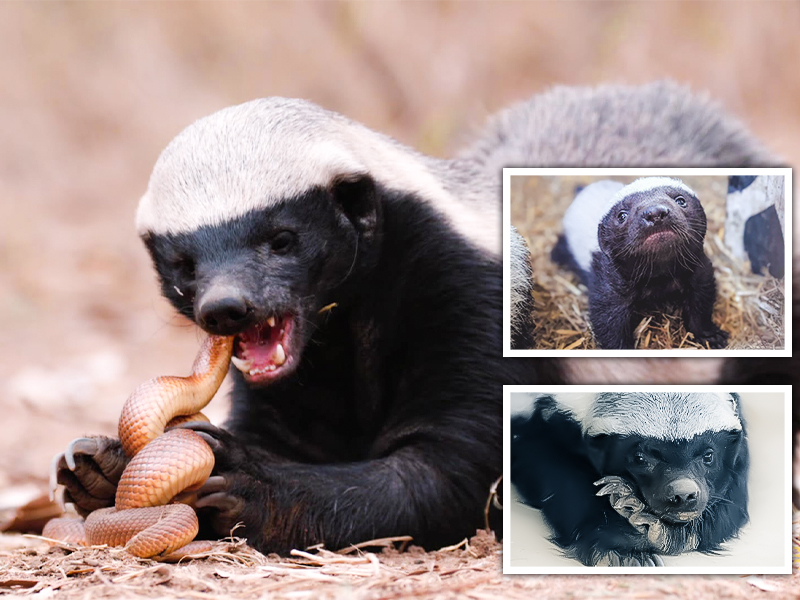
The honey badger is officially recognized as the world’s most fearless animal. Here’s the science behind its aggression, venom resistance, and survival tactics.
The World’s Most Fearless Animal
The honey badger (Mellivora capensis) is officially recognized by the Guinness Book of World Records as the world’s most fearless animal.
Despite weighing only 20 to 35 pounds, this small mammal regularly confronts predators many times its size — including lions, leopards, and hyenas. Instead of fleeing danger, the honey badger often charges toward it.
Science explains why.
What Makes the Honey Badger So Fearless?
The honey badger’s reputation is not based on exaggeration. Its fearlessness is the result of rare biological defenses, behavioral traits, and intelligence that give it an extraordinary survival advantage.
Thick, Loose Skin That Defies Predators
One of the honey badger’s most important defenses is its skin.
- Approximately 6 millimeters thick, thicker than a buffalo’s
- Extremely loose and elastic, allowing high flexibility
- Resistant to bites, bee stings, and even some primitive weapons
If grabbed by a predator, a honey badger can twist inside its own skin and bite back, often targeting vulnerable areas. This makes restraining it extremely difficult — even for apex predators.
Remarkable Resistance to Snake Venom
Honey badgers are among the few mammals known to survive bites from highly venomous snakes, including cobras and puff adders.
After being bitten, a honey badger may collapse into a temporary coma-like state. Hours later, it often recovers fully. In several documented cases, the animal wakes up and continues eating the snake that attacked it.
This resistance allows honey badgers to hunt prey that would kill most mammals.
Fearless, Offensive Defense Tactics
Unlike most animals, honey badgers do not rely on escape.
When threatened, they may:
- Release a strong, foul-smelling odor from an anal pouch
- Use powerful jaws to bite sensitive areas
- Slash attackers with long, sharp front claws
These aggressive tactics frequently cause larger predators to retreat, avoiding further injury.
Intelligence That Enhances Survival
Fearlessness alone does not explain the honey badger’s success.
Honey badgers are highly intelligent and have demonstrated:
- Tool use, such as stacking objects to escape enclosures
- Advanced problem-solving skills
- Strong memory and adaptability
This intelligence allows them to survive in diverse and hostile environments across Africa and Asia.
Why Larger Predators Often Avoid Honey Badgers
From an evolutionary standpoint, attacking a honey badger is rarely worth the risk.
- It refuses to retreat
- It absorbs damage unusually well
- It fights relentlessly
Even predators with superior strength often disengage, recognizing that the cost of the fight outweighs the reward.
More Than a Reputation
The honey badger’s internet fame may exaggerate its behavior, but the science supports the core truth.
It survives not because it is the biggest or fastest — but because it is:
- Tough
- Intelligent
- Highly aggressive when necessary
- Unwilling to surrender
In nature, fearlessness itself can be a powerful survival strategy.