
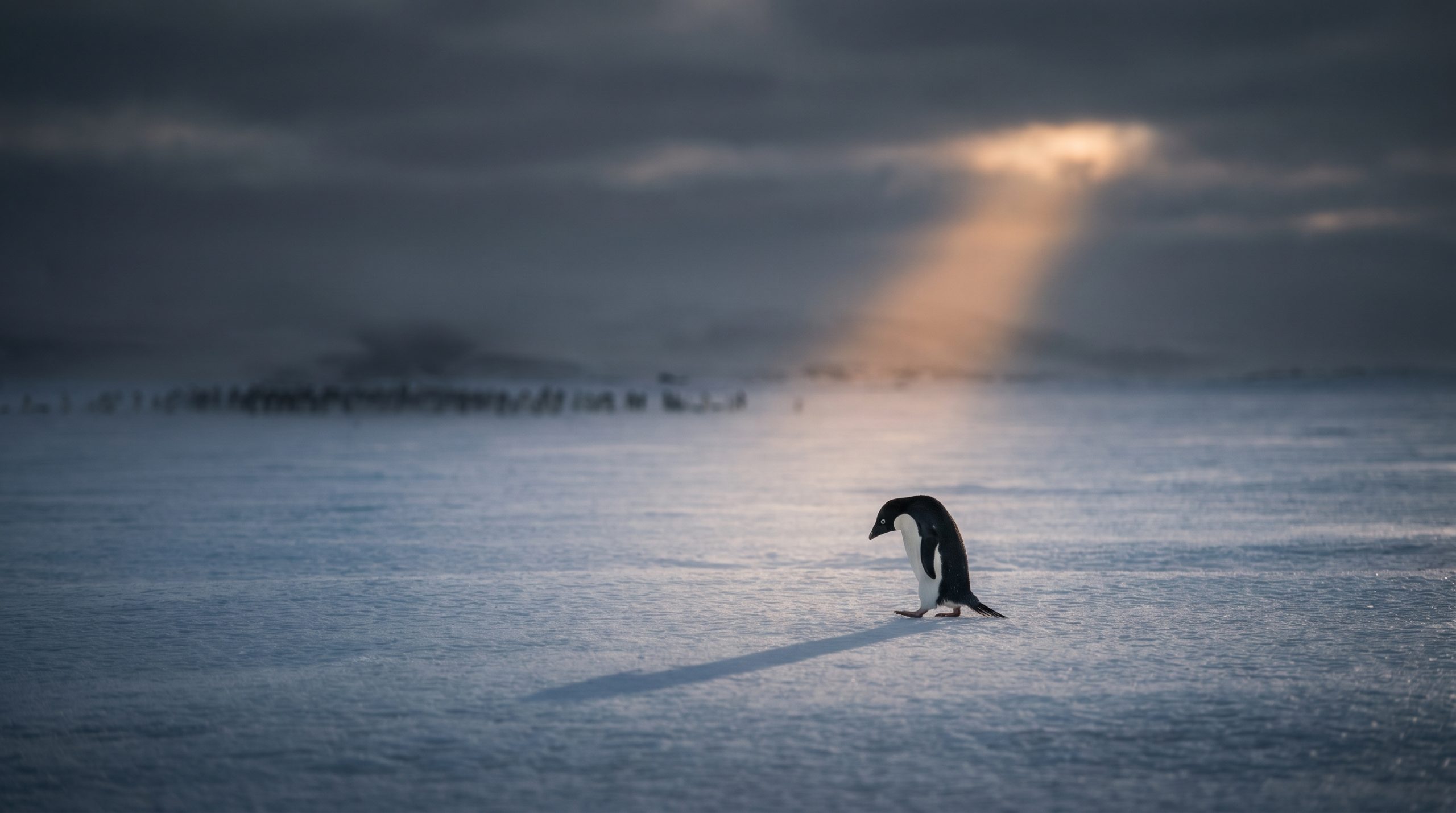
Why did millions of people suddenly fall in love with a lonely bird walking toward certain death? The answer reveals as much about us as it does about nature.
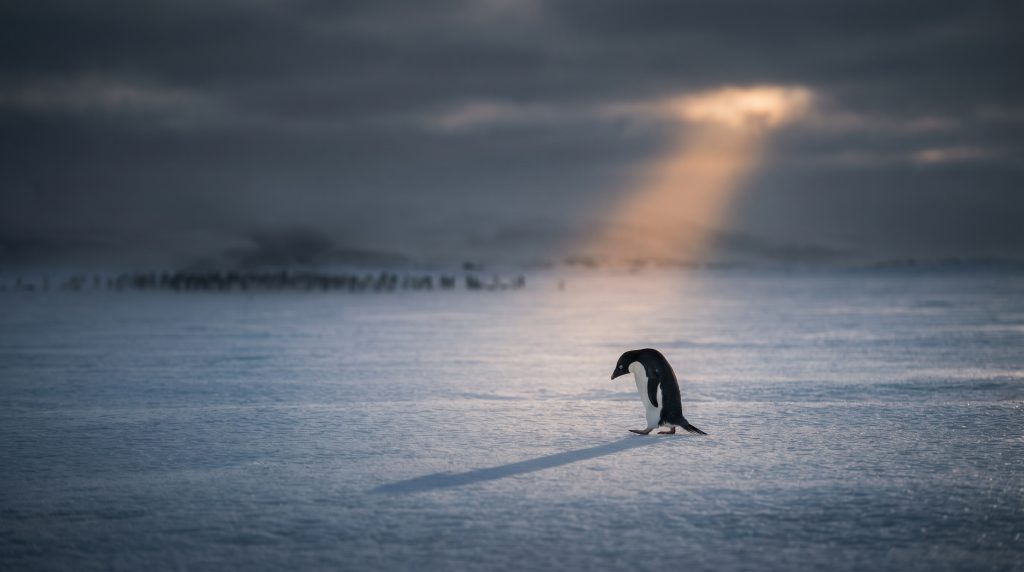
Introduction: The Penguin That Became a Mirror
In early 2026, a short clip of a lone penguin—separated from its colony, waddling with grim determination toward a distant mountain range—took over the internet. It was shared on TikTok, X (formerly Twitter), Reddit, and Instagram. People added somber music, captions like “me heading into the week,” and philosophical quotes about the meaninglessness of existence.
The Nihilist Penguin was born.
But here’s the twist: that footage is nearly 20 years old. And the real story behind that penguin’s journey is far stranger—and more tragic—than any meme can capture.
In this article, we’ll trace the penguin’s path from a 2007 documentary to the White House’s social media feed, separate meme from reality, and answer the question everyone’s asking: Why did that penguin actually walk away?
Chapter 1: The Birth of a Meme (That Took 19 Years)
The footage comes from the acclaimed German filmmaker Werner Herzog‘s 2007 documentary, Encounters at the End of the World. Herzog traveled to Antarctica’s McMurdo Station to capture the strange lives of people and animals at the bottom of the Earth.
At one point, his crew filmed an Adélie penguin breaking away from its colony. While hundreds of other penguins headed toward the ocean to feed, this single bird turned inland—toward a range of distant mountains and, ultimately, certain death.
Herzog’s narration is unforgettable:
“He will head towards the interior of the vast continent, with 5,000 kilometers ahead of him, and he’s heading towards certain death.”
The clip first appeared online around 2010 as the “deranged penguin.” But it wasn’t until early 2026 that it exploded. Users paired it with a haunting pipe organ cover of Gigi D’Agostino’s dance hit L’Amour Toujours. The contrast between the cheerful original and the mournful remix—plus the penguin’s slow, lonely march—struck a nerve.
Within weeks, the Nihilist Penguin became a global symbol of burnout, alienation, and the quiet urge to walk away from everything.
Chapter 2: From Internet Meme to White House Post
Things got truly bizarre in March 2026 when the official White House X account joined the trend. In a now-deleted post, they shared an AI-generated image of President Donald Trump walking alongside the Nihilist Penguin—which was now carrying an American flag—with the caption “Embrace the Penguin.”
There was just one problem: the post mentioned Greenland, a territory the administration had shown interest in acquiring. But penguins live in the Southern Hemisphere (Antarctica, South Africa, Chile, Australia, New Zealand). Greenland is in the Arctic, where there are no penguins.
The internet had a field day. Danish politicians, Greenlandic officials, and countless commenters gleefully pointed out the geographical blunder. Some called it “meme diplomacy” gone wrong. Others saw it as a perfect metaphor for how viral culture can override basic facts.
Whether intentional or not, the White House’s post cemented the Nihilist Penguin as more than a joke—it had become a cultural icon.
Chapter 3: The Real Science — A Broken GPS, Not a Philosophy
Now for the part that truly fits the In Depth Facts brand. As compelling as the meme is, scientists have a much more grounded—and fascinating—explanation for the penguin’s behavior.
🧭 Reason 1: Navigational Failure
Adélie penguins navigate using the position of the sun. Under normal circumstances, this system works perfectly. But occasionally, an individual bird suffers what biologists call a “total breakdown of their internal GPS.”
Penguin expert David Ainley, who has studied Adélie penguins for decades, explains that these disoriented birds appear to have no idea which direction leads to food or safety. They simply walk in a straight line away from the colony, often toward the interior of Antarctica, where no food exists.
🦠 Reason 2: Illness or Neurological Damage
Another possibility is that the penguin was sick. High fevers, brain parasites, or other neurological issues can cause erratic, self-destructive behavior in animals. Researchers have documented similar “wandering” behavior in birds infected with certain diseases.
Without a necropsy (which was not performed), we can’t know for sure. But the leading hypothesis among scientists who’ve studied the footage is navigational error combined with possible illness.
🌍 Reason 3: Climate Change as a Stress Factor
Some researchers speculate that environmental stress from climate change might increase the frequency of such disorientations. As sea ice patterns shift and food sources become less predictable, penguin colonies face unprecedented challenges. A stressed bird may be more vulnerable to navigational failure.
🐧 Reason 4: The Social Context
To understand how unusual this behavior is, let’s look at normal Adélie penguin society. These birds breed in colonies that can number in the hundreds of thousands. They show strong site fidelity—males return to the same nesting spot year after year with a 93% accuracy rate. They recognize their mates and chicks by voice. They huddle together for warmth.
A solitary bird walking away from all of that is like a human leaving their family, home, and city without any apparent reason. That’s why the image is so striking—even if the penguin isn’t making a philosophical choice, its actions still represent a profound break from normal behavior.
Chapter 4: Do Animals Feel Nihilism? The Question of Animal Emotions
The meme calls the penguin a “nihilist”—a being who believes life has no meaning. But can an animal actually experience such a complex human philosophy?
Short answer: No. Nihilism requires abstract thought, language, and self-awareness that penguins almost certainly lack.
But longer answer: That doesn’t mean animals have no inner lives.
Recent science has dramatically expanded our understanding of animal sentience. Consider these findings:
- A 2024 survey of animal behavior scientists found that 78% believe birds experience emotions such as joy, fear, and grief.
- Primatologist Frans de Waal has famously written: “I cannot name any emotion that is uniquely human.”
- Rats will free a trapped cage-mate before accessing a food reward, suggesting empathy.
- Orcas have been observed carrying dead calves for days, in what many interpret as mourning.
- Monkeys will reject unequal pay (grapes vs. cucumbers) in what looks like a sense of fairness.
So while the Nihilist Penguin isn’t contemplating existential philosophy, its inner world is far from empty. The tragedy is real—just not the one we projected.
Fact Check Box
| Fact | Details |
|---|---|
| Species | Adélie penguin (Pygoscelis adeliae) |
| Film | Encounters at the End of the World (2007), directed by Werner Herzog |
| Location | Near McMurdo Station, Antarctica |
| Distance walked | Estimated to be heading over 5,000 km (3,100 miles) inland |
| Likely outcome | Certain death by starvation, cold, and exhaustion |
| Could anyone help? | No. Scientists and visitors are forbidden from intervening, as it could cause more harm or disrupt natural processes |
| Expert quote | “Even if you bring such a bird back, it will likely just turn around and leave again.” — David Ainley, penguin ecologist |
| Viral resurgence | Early 2026, driven by TikTok and X (Twitter) with a pipe organ remix of L’Amour Toujours |
Conclusion: The Meme, The Bird, and Us
The Nihilist Penguin became a viral sensation because it holds up a mirror. When we watch that lonely bird walk away from its colony, we don’t see a confused animal with a broken compass. We see ourselves on a bad Monday. We see the friend who ghosted everyone. We see the quiet voice that whispers, “What if I just left?”
The meme is funny. It’s relatable. But the real story—a disoriented bird marching 5,000 kilometers toward certain death—is something else entirely. It’s a reminder that nature is full of strange, tragic, and awe-inspiring events that don’t need human meaning to matter.
So the next time you share a Nihilist Penguin meme, take a moment to appreciate the actual bird behind the joke. It wasn’t making a statement. It was just lost. And in a way, that’s even more profound.